
The Uncharted Feast: A Culinary Journey Through Secondary Destinations via Cross-Border Rail and Multi-Destination Passes
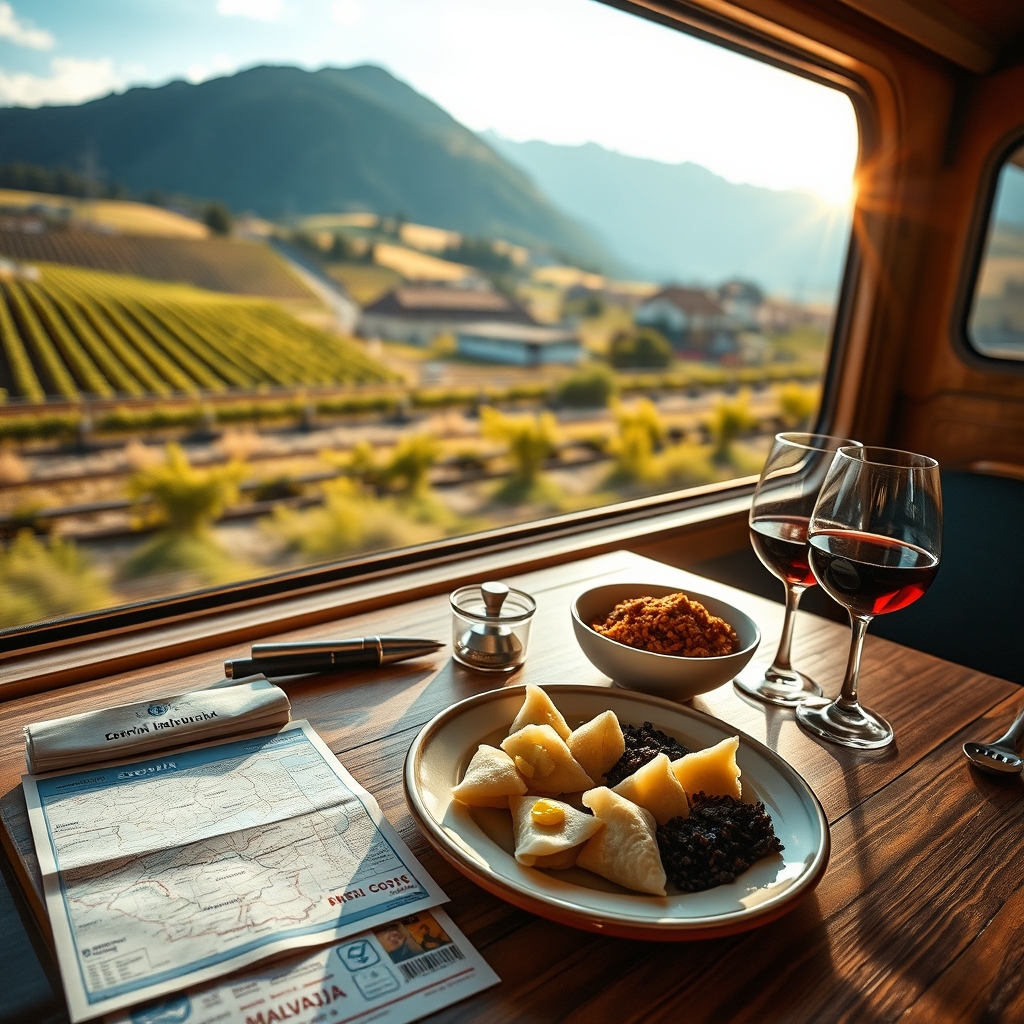
There’s something inherently magical about boarding a train in one country and disembarking in another, the landscape shifting subtly with each passing mile. The rhythm of the tracks, the hum of conversations in unfamiliar languages, and the promise of undiscovered flavors waiting at the next stop—this is the essence of cross-border rail travel. Yet, while many travelers flock to the well-trodden routes of Paris to Barcelona or Vienna to Prague, a world of culinary and cultural riches lies hidden in the secondary destinations, accessible only by venturing off the beaten path.
The Allure of Multi-Destination Passes
Multi-destination passes, like the Eurail Global Pass or the Interrail Pass, are often underutilized for their potential to unlock lesser-known regions. These passes aren’t just about convenience; they’re about freedom—the freedom to weave together a tapestry of experiences that transcend borders. Imagine starting your journey in the rolling vineyards of Slovenia’s Goriška Brda, where crisp white wines flow as freely as the stories of local winemakers. From there, a short train ride takes you to the Istrian Peninsula in Croatia, where truffle-infused dishes and olive oil tastings await in medieval hilltop towns like Motovun. The pass doesn’t just save you money; it opens doors to places where tourism hasn’t yet diluted the authenticity of the experience.
Beyond the Guidebook: Rail Routes to Culinary Delights
The beauty of cross-border rail lies in its ability to connect you to places that are often overlooked by mainstream tourism. Take the train from Budapest to Bratislava, for instance. While Budapest’s ruin bars and thermal baths are undeniably captivating, Bratislava offers a quieter charm, with its cobbled streets and hidden courtyards serving up Slovakian specialties like bryndzové halušky—potato dumplings smothered in sheep’s cheese and crispy bacon. The journey itself is a feast for the senses, with the Danube River carving a path through lush landscapes, punctuated by the occasional castle perched on a hillside.
Further east, the rail lines of the Balkans offer a similar treasure trove of culinary discoveries. The route from Belgrade to Skopje, for example, winds through Serbia’s fertile countryside, where roadside stalls sell fresh ajvar—a roasted red pepper and eggplant spread—and plums destined to become the nation’s beloved šljivovica brandy. In North Macedonia, Skopje’s Ottoman-era bazaar is a labyrinth of spice stalls, grilled meats, and sweet baklava, where the air is thick with the scent of cumin and smoked paprika. These are not the places you’ll find on the cover of travel magazines, but they are the places where food tells the story of a region’s soul.
Seasonal Festivals: The Hidden Gems of Secondary Destinations
One of the greatest joys of traveling by rail is the ability to time your journey with local festivals, many of which are celebrated in secondary destinations with a fervor that’s hard to find in tourist hotspots. In the autumn, the small town of Alba in Italy’s Piedmont region becomes the epicenter of the world’s most prestigious truffle festival. Visitors flock to the Fiera Internazionale del Tartufo Bianco d’Alba, where truffle hunters and their dogs demonstrate their craft, and local chefs create dishes that elevate the humble fungus to gourmet heights. The train from Turin to Alba is a scenic ride through the Langhe hills, dotted with vineyards and hazelnut groves, making the journey as memorable as the destination.
Similarly, the Fête des Lumières in Lyon, France, transforms the city into a dazzling spectacle of light and color every December. While Lyon is hardly a hidden gem, the festival’s lesser-known counterpart in the nearby town of Saint-Étienne offers a more intimate experience. Here, the Biennale Internationale du Design often coincides with the holiday season, turning the town into a canvas for avant-garde light installations and interactive art. The train from Lyon to Saint-Étienne takes less than an hour, but the contrast between the two cities—one steeped in history, the other a hub of contemporary creativity—is striking.
The Slow Travel Advantage: Scenic Bus Routes and Local Immersion
While trains are the backbone of cross-border exploration, scenic bus routes offer a slower, more immersive way to experience a region’s culinary and cultural landscape. In Portugal, the Rede Expressos bus network connects Lisbon to the Alentejo region, where time seems to move at a different pace. The journey winds through cork oak forests and golden plains, stopping in towns like Évora, a UNESCO World Heritage site where Roman ruins stand alongside medieval churches. Here, the food is hearty and unpretentious—think black pork stewed with clams, or açorda à alentejana, a bread soup infused with garlic, cilantro, and poached eggs. The bus ride itself is an opportunity to chat with locals, who are often eager to share stories about their hometowns and recommend hidden gems.
In Japan, the Shikoku Pilgrimage bus routes offer a spiritual and culinary journey through the island’s 88 temples. While the pilgrimage is traditionally done on foot, the bus provides a practical alternative for those short on time. Along the way, travelers can sample regional specialties like sanuki udon, a chewy wheat noodle dish, or sudachi, a citrus fruit used to flavor everything from seafood to sweets. The bus stops at roadside stalls and small restaurants, where the food is prepared with a reverence that reflects the island’s deep Buddhist traditions.
Crafting Your Own Cross-Border Culinary Itinerary
Planning a cross-border culinary adventure requires a bit of research, but the rewards are well worth the effort. Start by identifying a region that piques your interest—whether it’s the wine regions of Central Europe, the spice markets of the Balkans, or the seafood havens of the Adriatic. Next, map out a route using a combination of trains and buses, taking care to time your journey with local festivals or seasonal harvests. Multi-destination passes are invaluable here, as they allow you to hop on and off trains without the hassle of purchasing individual tickets.
Don’t be afraid to stray from the guidebooks. Some of the best culinary experiences happen spontaneously—whether it’s accepting an invitation to a family-run konoba (tavern) in Croatia, or stumbling upon a street food stall in Serbia that’s been serving the same recipe for generations. The key is to approach your journey with an open mind and a willingness to embrace the unexpected. After all, the most memorable meals are often the ones that aren’t planned.
As the train rolls into your final destination, the flavors of your journey linger on your palate, each bite a reminder of the places you’ve been and the people you’ve met. The beauty of cross-border rail travel lies not just in the destinations themselves, but in the connections forged along the way—between cultures, cuisines, and the shared human experience of discovery. Whether you’re savoring a bowl of pho in Hanoi or a plate of paella in Valencia, the world feels a little smaller, a little more interconnected, and infinitely more delicious.