
The Unseen Path: How International Rail Journeys and Anti-Tourism Escapes Are Crafting the Next Era of Travel
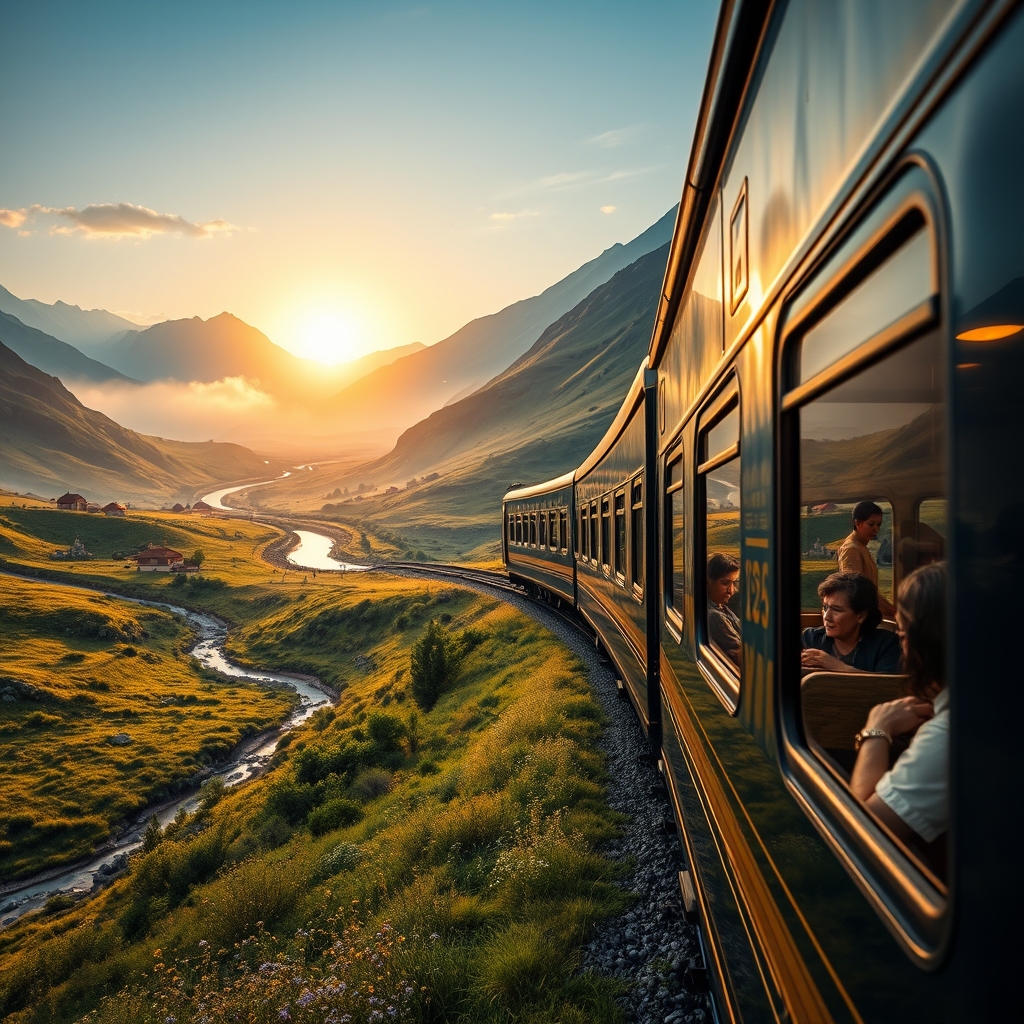
There’s a quiet revolution unfolding on the tracks and trails of the world, one that whispers of authenticity, sustainability, and the kind of slow-burning wonder that only comes when you step off the beaten path. International rail journeys and anti-tourism escapes are not just modes of travel; they are philosophies—inviting wanderers to trade the frenetic pace of modern tourism for something deeper, something richer. This is the art of traveling not as a spectator, but as a participant in the rhythm of the places you visit.
The Allure of the Iron Road
Trains have long been romanticized as vessels of adventure, and for good reason. There’s an unmatched magic in watching landscapes unfold from the window of a moving carriage—mountains giving way to valleys, cities dissolving into countryside, and the hypnotic clatter of wheels on tracks lulling you into a meditative state. But beyond the romance, international rail journeys offer something far more practical: a sustainable, immersive way to explore multiple destinations without the carbon footprint of flights or the isolation of rental cars.
Consider the Trans-Siberian Railway, a journey that stretches over 9,000 kilometers from Moscow to Vladivostok, cutting through eight time zones and offering a glimpse into the vast, untamed beauty of Russia. Or the Orient Express, which weaves through the heart of Europe, connecting Paris to Istanbul in a journey that feels like stepping back in time. These are not just trips; they are odysseys that challenge the very notion of what travel can be. They force you to slow down, to engage with the world at a pace that allows for serendipity—striking up conversations with fellow passengers, lingering in station cafés, or simply staring out the window as the world blurs past.
The Rise of the Anti-Tourism Movement
While rail journeys offer a slower, more deliberate way to traverse the globe, the anti-tourism movement is redefining what it means to experience a destination. Anti-tourism isn’t about avoiding travel altogether; it’s about rejecting the superficial, the overcrowded, and the commodified in favor of the authentic, the undiscovered, and the meaningful. It’s a rebellion against the Instagram-driven hordes descending on the same handful of landmarks, and a celebration of the places—and people—often overlooked by mainstream tourism.
Take, for example, the quiet villages of the Azores, where volcanic landscapes meet emerald waters, and the pace of life is dictated by the tides rather than the clock. Or the remote valleys of Bhutan, where the concept of Gross National Happiness shapes a culture that values well-being over mass tourism. These are the kinds of places where you can still find the soul of travel—where interactions with locals are genuine, where nature is untouched, and where the act of exploration feels like a privilege rather than a transaction.
Where Rail Meets Anti-Tourism
The intersection of international rail journeys and anti-tourism is where the future of travel is being written. Trains, by their very nature, encourage a slower, more thoughtful approach to exploration. They connect you to the land in a way that planes simply cannot, offering a front-row seat to the changing scenery and the subtle shifts in culture that occur as you cross borders. And when paired with the principles of anti-tourism, they become a powerful tool for crafting journeys that are as enriching as they are unforgettable.
Imagine boarding a train in Lisbon and disembarking days later in the vineyard-dotted hills of the Douro Valley, where family-run quintas offer wine tastings that feel more like catching up with old friends than a tourist attraction. Or hopping on a sleeper train in India, waking up in the holy city of Varanasi, where the Ganges flows with a spiritual energy that transcends the guidebook descriptions. These are the kinds of experiences that linger long after the journey is over, not because they were flashy or extravagant, but because they were real.
The Practicalities of Slow Travel
Of course, embracing this style of travel requires a shift in mindset. It means trading the checklist mentality for a willingness to wander, to get lost, and to let the journey unfold organically. It also means doing a bit of legwork upfront—researching rail passes like Eurail or Japan Rail, which can make multi-country train travel more affordable, or seeking out lesser-known routes that avoid the tourist crowds. But the rewards are immeasurable: a deeper connection to the places you visit, a lighter impact on the planet, and memories that are uniquely yours.
For those willing to take the plunge, there are a few key strategies to keep in mind. First, prioritize flexibility. The beauty of slow travel lies in its spontaneity, so leave room in your itinerary for unplanned detours or extended stays in places that capture your heart. Second, embrace the local. Whether it’s striking up a conversation with a fellow passenger on a train or accepting an invitation to a village festival, these are the moments that transform a trip into a story. And finally, travel light. The less you carry, the easier it is to move through the world with the kind of freedom that defines this style of exploration.
The Hidden Gifts of Going Off-Grid
One of the most profound aspects of combining rail journeys with anti-tourism is the opportunity to disconnect—not just from technology, but from the noise of modern life. In a world where we’re constantly bombarded with information and expectations, there’s something deeply liberating about stepping onto a train and letting the rhythm of the journey dictate your days. It’s a chance to rediscover the joy of being present, of savoring the simple pleasures of a good book, a scenic view, or a shared meal with strangers who become friends.
And then there’s the environmental benefit. Trains are one of the most sustainable forms of long-distance travel, producing significantly fewer carbon emissions than planes or cars. By choosing rail over air, you’re not just reducing your footprint; you’re making a statement about the kind of world you want to live in—one where travel is a force for good, not just for the traveler, but for the planet and the communities you visit.
As the world grows increasingly interconnected, it’s easy to forget that the most meaningful journeys are often the ones that take us inward as much as outward. International rail travel and anti-tourism escapes offer a way to step off the hamster wheel of modern life and rediscover the art of wandering with purpose. They remind us that travel is not just about the destinations we reach, but the people we meet, the stories we collect, and the quiet moments of connection that make life feel rich. And perhaps, in the end, that’s the greatest gift of all—a reminder that the world is vast, beautiful, and waiting to be explored, one slow mile at a time.