
Beyond the Tourist Trail: Immersive Regional Food Exploration Along Mountain Corridor Treks
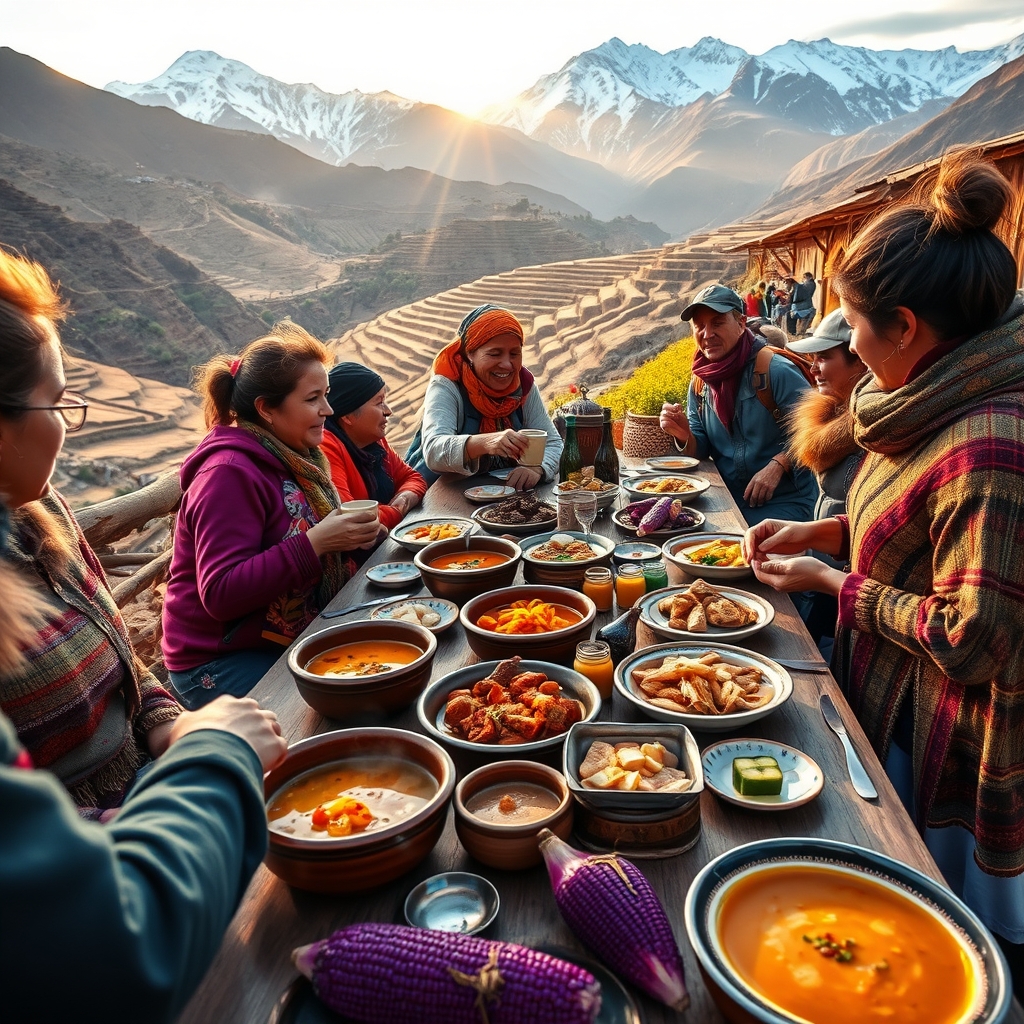
There’s something profoundly transformative about stepping off the well-trodden tourist path and into the quiet rhythm of a region’s culinary heartbeat. While viral hotspots dazzle with their curated charm, the real magic often lies in the unassuming mountain corridors, where food becomes a language of its own—spoken in simmering stews, freshly baked bread, and the laughter of locals gathered around a shared table. These routes, woven through landscapes both rugged and serene, offer more than just a journey; they invite travelers to taste the soul of a place, one bite at a time.
The Allure of Mountain Corridor Treks
Mountain corridors are nature’s highways, carved over centuries by rivers, trade, and human resilience. Unlike the crowded peaks of popular trekking destinations, these lesser-known paths wind through villages where time moves slower, and traditions run deep. The Annapurna Circuit in Nepal, the Dolomites’ Alta Via routes in Italy, or the lesser-explored Rwenzori Mountains in Uganda are not just treks—they’re gateways to cultural immersion. Here, the altitude isn’t just measured in meters but in the richness of stories shared over steaming cups of butter tea or plates of polenta topped with wild mushrooms.
What makes these corridors truly special is their ability to connect travelers with communities that have preserved their culinary heritage for generations. In the Swiss Alps, for instance, the Via Alpina trail leads hikers through alpine meadows where dairy farmers still craft cheese using methods passed down through centuries. A detour to a mountain hut might reward you with a slice of raclette, melted over a wood fire and served with pickles and potatoes—simple, yet unforgettable. These moments are the antithesis of fast travel; they’re slow, deliberate, and deeply human.
Regional Food as a Cultural Compass
Food is the most visceral way to understand a culture, and regional dishes often tell stories of geography, history, and survival. Along mountain corridors, where ingredients are dictated by the land, every meal is a lesson in adaptation. In the Andes, quinoa and chuño (freeze-dried potatoes) are staples, born from the necessity of high-altitude farming. In the Caucasus Mountains, khachapuri, a cheese-filled bread, reflects the region’s pastoral traditions and its position as a crossroads of empires.
One of the joys of exploring these routes is stumbling upon ferias—local markets where farmers and artisans gather to sell their wares. In the Peruvian Andes, the Sunday market in Pisac is a riot of color and flavor, with stalls brimming with purple corn, exotic fruits like lúcuma, and bundles of fresh herbs. Sampling anticuchos (grilled beef heart skewers) or rocoto relleno (stuffed spicy peppers) from a street vendor isn’t just a meal; it’s an education in the region’s agricultural bounty and culinary ingenuity.
The Role of Multi-Destination Passes in Culinary Exploration
For travelers eager to dive deep into regional food scenes, multi-destination passes can be a game-changer. These passes, often overlooked in favor of single-location tickets, unlock access to a network of experiences that might otherwise remain hidden. In Japan, the JR Pass isn’t just a ticket for bullet trains; it’s a key to exploring the country’s diverse culinary landscapes. A detour to Kanazawa, for example, reveals a city where kaiseki cuisine is elevated to an art form, and the Omicho Market teems with seafood so fresh it practically leaps onto your plate.
Similarly, Europe’s Eurail Pass allows travelers to hop between mountain villages and coastal towns, each with its own gastronomic identity. Imagine starting your day with a Swiss breakfast of bircher muesli in the Jungfrau region, then taking a train to the Italian Dolomites for lunch—a hearty plate of canederli (bread dumplings) in a cozy rifugio. These passes don’t just save money; they encourage a kind of travel that’s fluid, spontaneous, and deeply enriching.
Seasonal Festivals: Where Food and Tradition Collide
Timing a trek or road trip to coincide with a local festival can turn a great trip into an unforgettable one. Seasonal festivals are often tied to the harvest or historical events, and they offer a rare glimpse into a community’s collective joy. In the Himalayas, the Losar festival marks the Tibetan New Year with feasts of momos (dumplings), thukpa (noodle soup), and butter tea, all shared among families and travelers alike. The warmth of the celebration is as nourishing as the food itself.
In the Basque Country of Spain, the Txakoli wine harvest festivals are a celebration of the region’s crisp white wines and pintxos—Basque tapas that are as much a work of art as they are a meal. Travelers can join locals in the vineyards, stomping grapes and toasting to the season’s bounty. These festivals aren’t just about eating and drinking; they’re about participating in a tradition that’s been alive for centuries.
Off-Peak Road Trips: The Secret to Authentic Experiences
While summer might be the peak season for mountain treks, traveling during the off-peak months can yield some of the most authentic experiences. In the autumn, the Dolomites are a painter’s palette of reds and golds, and the trails are quieter, allowing for unhurried conversations with shepherds and cheese makers. Winter, too, has its charms—imagine trekking through the Atlas Mountains in Morocco, where snow-capped peaks give way to valleys dotted with tagine slow-cooking over open fires.
Off-peak travel also means fewer crowds at the table. In the Italian Alps, agriturismi—farm stays that offer home-cooked meals—are more likely to invite guests into their kitchens during the quieter months. There, you might learn to make pizzoccheri, a buckwheat pasta dish from Valtellina, or polenta concia, a creamy polenta enriched with cheese and butter. These are the kinds of experiences that turn a meal into a memory.
Mountain corridors and regional food exploration are more than just travel trends; they’re a reminder that the best journeys are those that engage all the senses. They challenge us to slow down, to seek out the stories behind the dishes, and to connect with the people who keep these traditions alive. In a world where travel often feels rushed and superficial, these paths offer a way to dig deeper, to savor not just the flavors but the very essence of a place. And perhaps, in doing so, we rediscover what it means to travel—not just to see, but to truly experience.